Chef Kim Jeong-man spent his childhood
in the herb-medicine alley of Daegu.
Herbs were always piled along that alley.
Dried roots and strips of bark,
berries he could not name.
Something simmered all day in the great cauldrons,
and the alley held a scent that was bitter and, somehow, warm.
To the boy, none of it was remarkable.
It was only the alley he walked every day,
the smell that was always there.
One day his grandfather looked into a handful of herbs and said:
Jeong-man. Rush a good thing and it never tastes right.
You have to know how to wait. That is how what is inside comes out.
He did not understand it then.
And then he left that alley.
He became a cook,
and passed through kitchens and dining rooms all over the country.
He handled the meat,
learned the fire,
grilled and grilled again.
Thirty years of it.
Through all that time, one dish he never let go of:
bakpo galbi, pork ribs.
He looked for better meat.
He changed the fire.
He tried different lengths of time.
But the longer he worked,
the more he felt there was something
good meat and good fire alone could not fill.
And a scent he had breathed long ago came back to him.
Medicinal herbs.
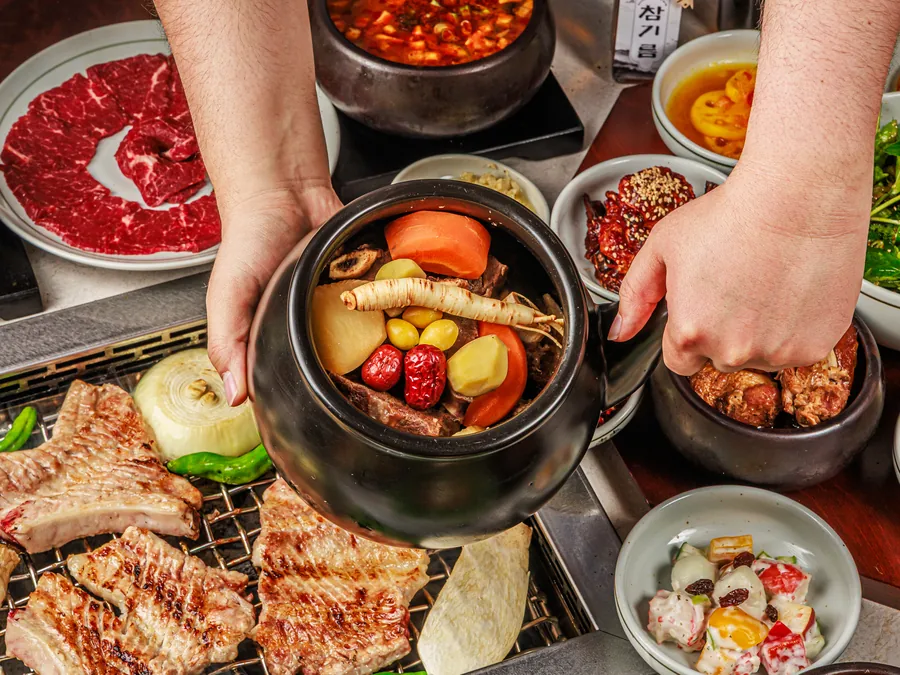
But adding herbs
does not make food good.
A strong scent covered the meat.
And nothing about the flavor could be given up
for the sake of a fine ingredient.
Not food where the herbs arrive first,
not food that turns special only once you explain them.
It had to taste good as meat,
and only then, quite naturally,
leave a Korean fragrance and depth behind.
Chef Kim puts it this way.
How you bring good herbs into harmony with Korean flavor.
Chef Kim Jeong-man
I saw that as our strongest hand.
The herbs he had been too used to notice as a child
began, thirty years later, to become a new answer.
The dish he shaped longest around that idea
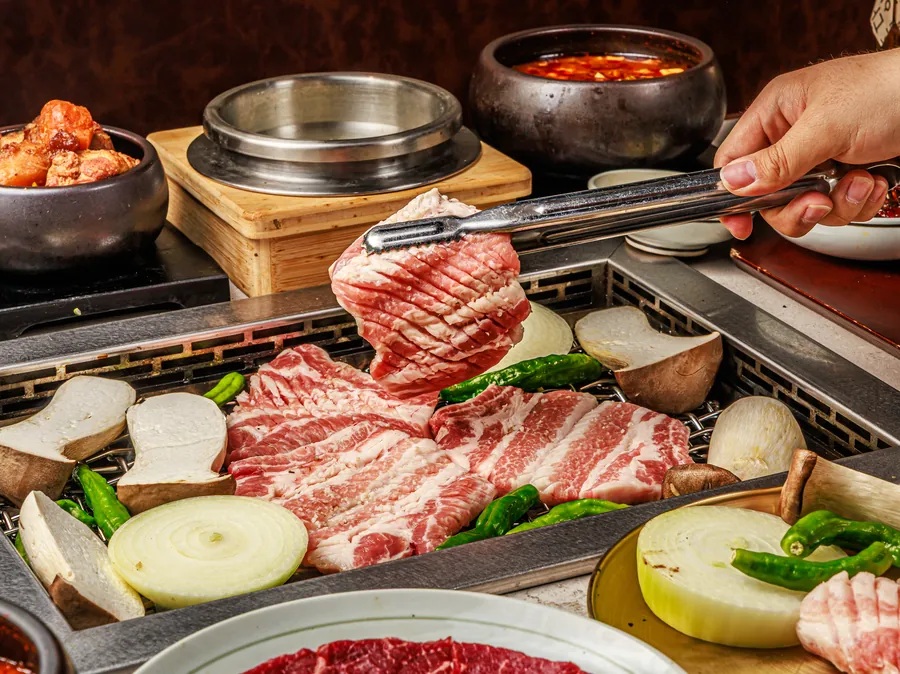
is bakpo fresh pork galbi.
The ribs rest in nuruk salt
and water steeped with medicinal herbs.
It was not 168 hours from the start.
He shortened it,
lengthened it,
changed the herb blend,
and tasted again.
When the flavor went too far, he went back to the beginning.
He repeated that, and repeated it.
After thousands of attempts,
the time that remained was 168 hours.
And then, out of nowhere,
his grandfather's words come back.
Rush a good thing and it never tastes right.
To the boy it had been
a line about herbs, nothing more.
Thirty years on,
it sounds a little different.
Good food was like that.
So were people,
and so was one man's road.
Some things need time.
So in 2026,
opening the doors in Bukchon, he gave it the name
Anguk Yakbang. The apothecary of Anguk.
Not to move that childhood alley here as it was.
A place where what he learned over thirty years of cooking
and what had stayed in his body since childhood
are worked out again inside Korean food as it is now.
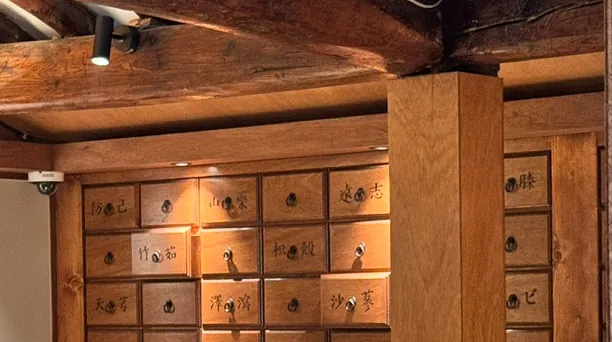
Chef Kim still runs the kitchen
at Anguk Yakbang himself.
He opens the aging room,
decides the herb blend,
and when meat that has waited 168 hours reaches the charcoal,
we take the last step as well.
So that no one misses the best moment
while turning the ribs themselves,
our staff grills them at your table.
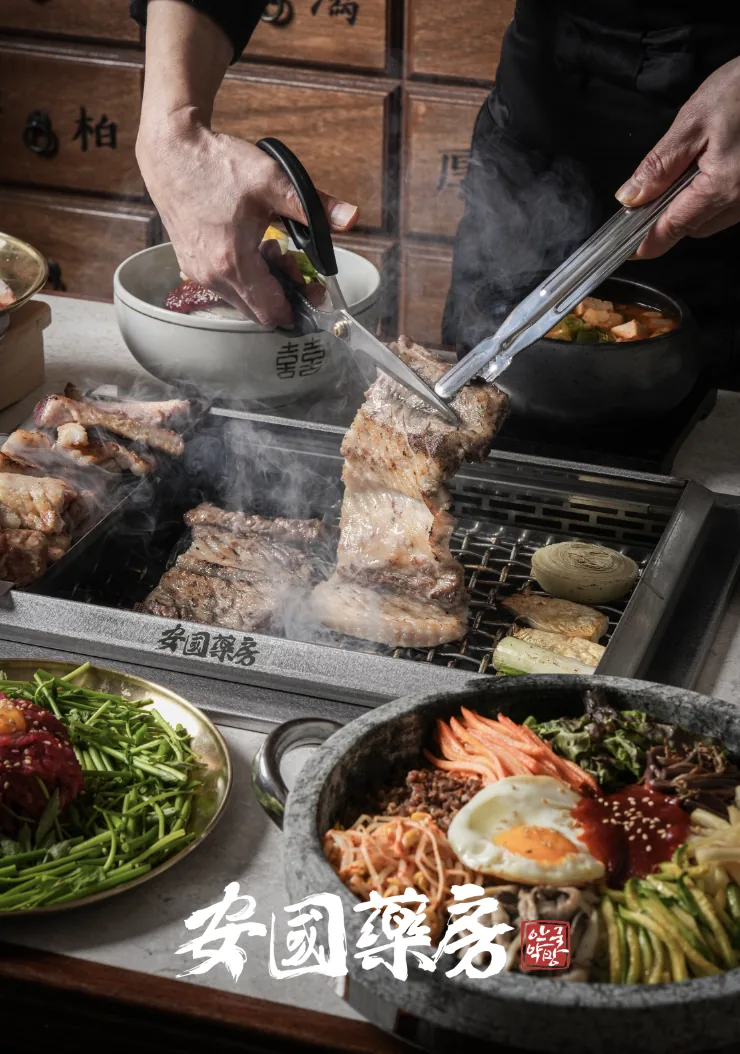
Beside it we set yakseon sotbap, rice steamed with herbs in its own pot,
and yaksang, a spread of eight side dishes.
To carry a story that began with a single rib
through to a full table.
A memory that began in a small herb alley in Daegu
travelled the country for thirty years
and continues here, in Bukchon, Seoul.
The meaning of waiting,
the thing the boy did not understand.
For one man it took thirty years.
For one rib it takes 168 hours.
Thirty years to prepare it.
168 hours to wait for it.
This is Anguk Yakbang.